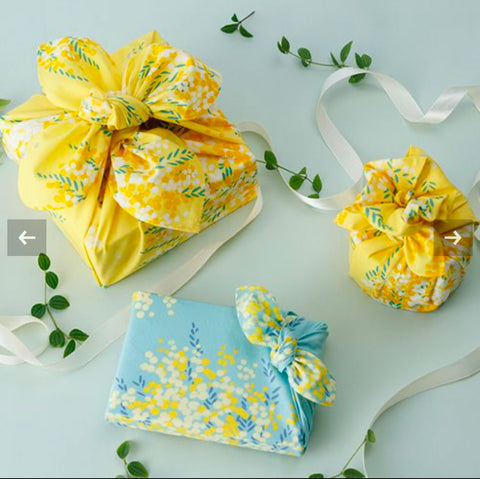
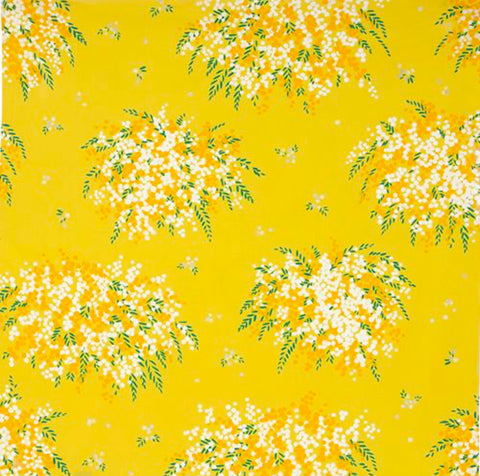
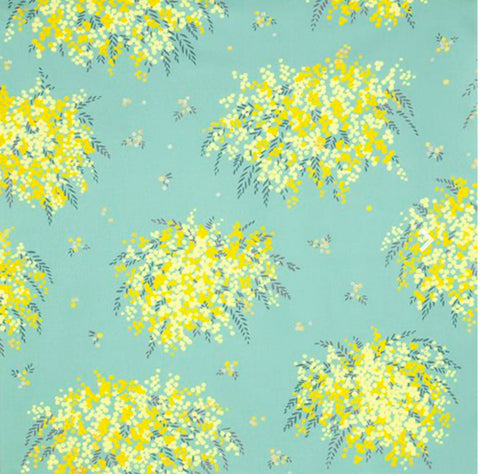
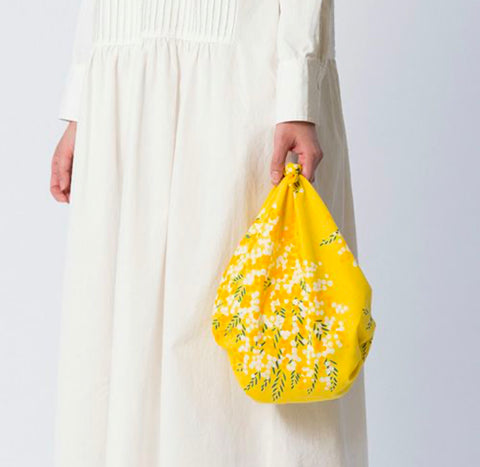
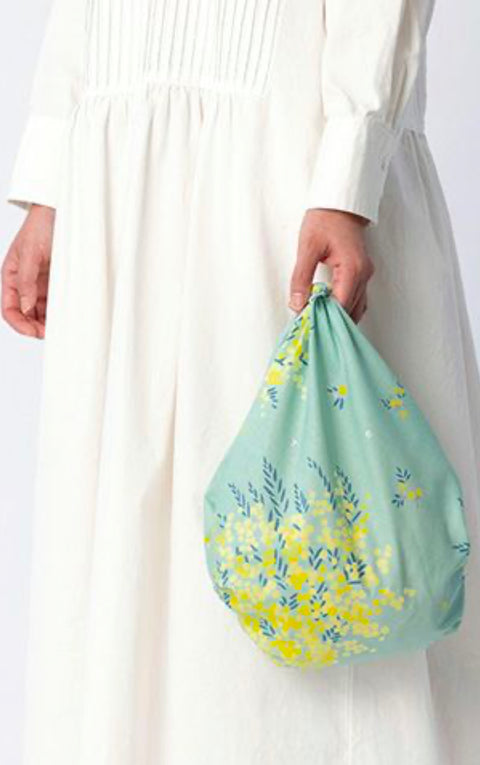
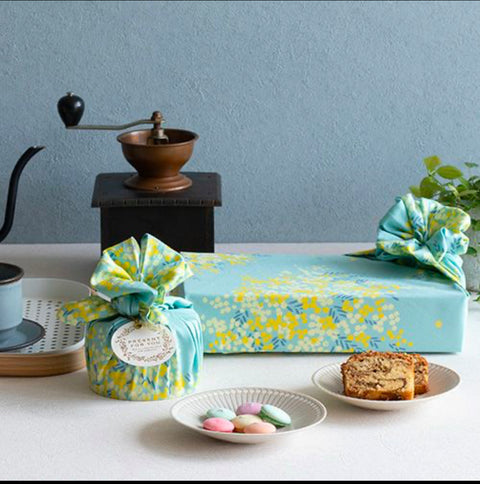
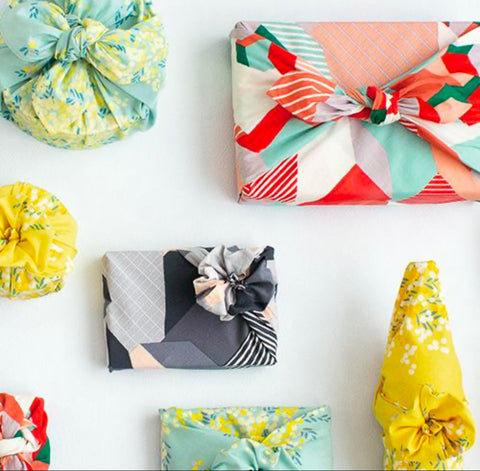
Furoshiki wrapping “ Mimosa| Blue |Yellow ”
$20.00
Pickup currently unavailable
Made in Japan
Kyoto from musubi company
Product Description
Bouquets of mimosas are depicted, with flowers adorned by silver pigment print, adding a jeweled touch around the bouquets. Yellow mimosas are often called "happiness flowers" as they symbolize the beginning of spring after a long, tough winter in Europe. This furoshiki is perfect for gifting women, entrance and graduation ceremonies, or as a thoughtful wrap for Mother's Day gifts.
Product Details
- Dimensions:70x70 cm (27.6 x 27.6in).
- Weight:82 g. (2.89oz)
- Material:100% cotton.
- Made in Japan.
- Gift Wrapping (Gift box, Bottle etc...)
Cohare
This cohare series is made from thin cotton and features casual designs. It is popular for wrapping and often used as a sales promotion. It is also recommended for table mats and wrapping children's bento boxes.
Refers from :
https://www.musubi-furoshiki.com/pages/a-history-of-furoshiki
A history of more than 1,300 years
Furoshiki, a single piece of fabric, have been used for more than 1,300years.
The name might have changed a few times, but the shapes remain almost the same.
Furoshiki contain the wisdom and soul of our predecessors.
Even with limited land and resources and small housing, the Japanese have continued to live happily because
they have not forgotten their gratitude for what they have and have displayed wisdom and creativity
in using the necessary amount at the necessary time effectively right to the end.
History of Furoshiki
The history of furoshiki has two branches. One is the branch that furoshiki have followed as a wrapping cloth.
The custom of wrapping things in cloth dates from ancient times.
There is a record remaining from the Nara period(710-794) of people keeping valuables wrapped in fabrics called "Tsutsumi".
Documents show that there were fabrics called "koromozutsumi" in the Kamakura period(1192-1338).
These were the predecessors of the furoshiki that we use today as a wrapping cloth.
The name has changed with the times, but the custom is the same.
Koromo(衣)=clothes + Tsutsumu(包) =wrap

The uses of furoshiki have evolved over time, adapting from its traditional roles to modern-day applications.

After that ?
Meanwhile usage of the word "furoshiki" increased as public baths (furo) became more common.
The word "furoshiki" can be found in the list of items left by the shogun Tokugawa Ieyasu(1543-1616).
It referred to a cloth that was used when taking a bath.
Originally a furo was not a soaking bath but a steam bath, and people used furoshiki to wrap their clothes while they were in
the bath so that their clothes did not get mixed up with those others. When they got out of the bath, people would use the
cloth for wiping their feet and to stand on while dressing.
Since the "Hirazutsumi" and furoshiki were similar in shape and use, gradually the distinction between them disappeared in
everyday life, and by the middle of the Edo period people were commonly referring to wrapping cloths and furoshiki.

Past and Present
Wrapping and trying are the essential elements of furoshiki.
The origins of these two words in Japanese are very interesting.
The kanji for "Tsutsumu"(wrap; 包) comes from the figure of a woman admiring the baby in her womb.
The character for "Musubu" (tie; 結) means giving shape to something or making something from nothing.
"Omusubi", a rice ball, means shaping rice by pressing it. "Mi o musubu",
to grow fruit means that a fruit is grown from nothing. By piece of cloth, give it shape, and fulfill a purpose.
Furthermore, by wrapping an object, you are handling it with care and showing respect to the receiver.
Furoshiki reflect the sensitivity of Japanese.

Ref.Text: Etsuko Yamada/ Photos: Kanji Okamoto『風呂敷つつみ-A Complete Guide to Furoshiki-』
Published by ©Banana Books (TRANSVIEW Co. Ltd.)